
🐝 Day 25: The Great Frame Swap — Saving Two Hives in One Afternoon
If there’s one thing beekeeping teaches you, it’s that bees don’t read the rulebook! Just when you think you’ve got a routine down, you open up a hive and find a high-stakes puzzle waiting for you. That was exactly our afternoon on July 12th.
Amanda Collins
7/12/20262 min read
🚨 The Keep in Crisis: Honey-Bound and Swarm-Minded
When I opened up The Keep, I immediately noticed something was off. The colony was thriving, but the queen was running out of space to lay. They had become completely honey-bound (nectar-bound)—meaning the worker bees filled up almost every available brood cell with nectar, leaving their queen zero room to lay new eggs.
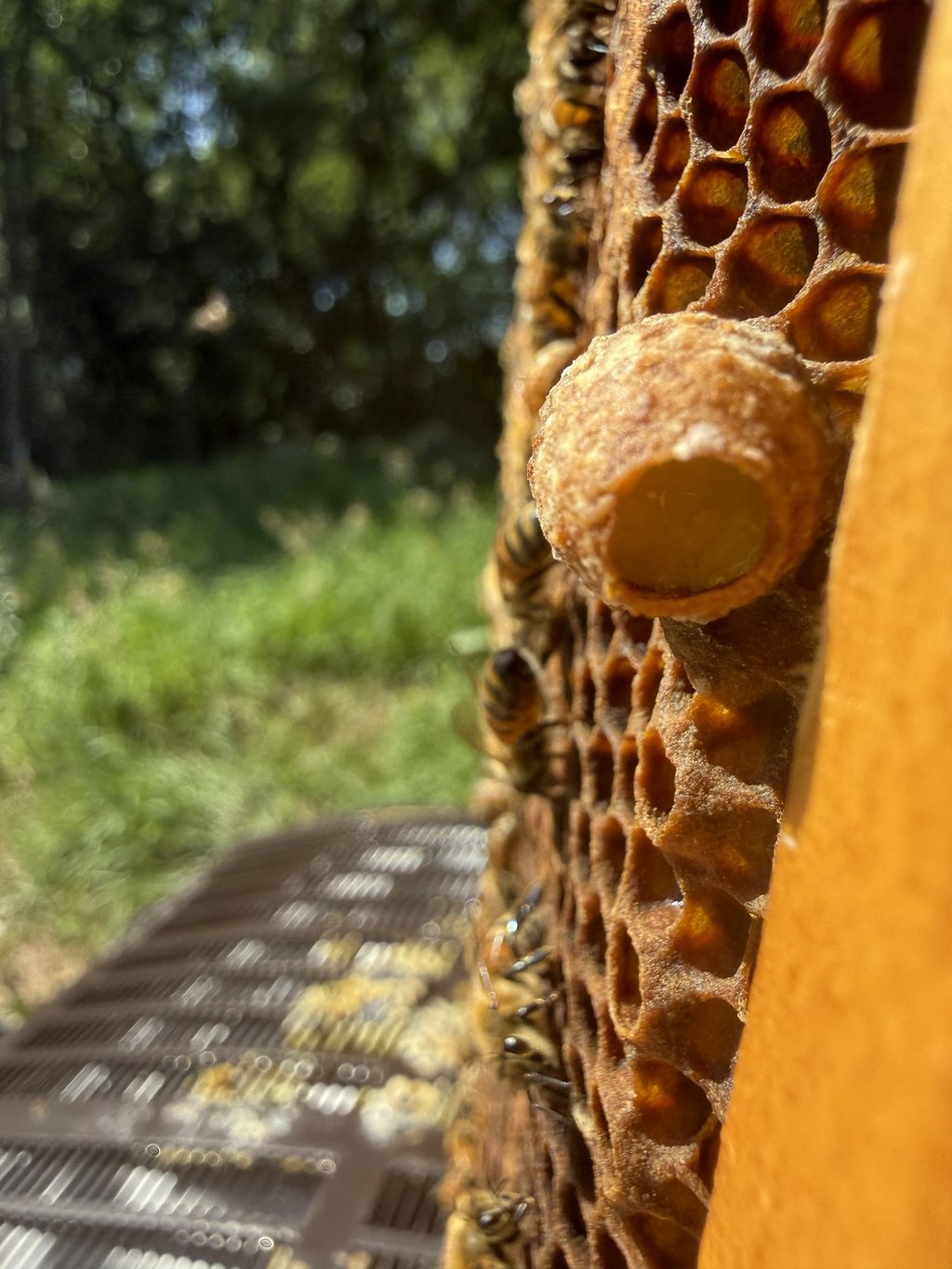
To solve their space problem the only way they knew how, the hive was preparing to swarm. During my inspection, I spotted two fresh queen cells:
One was already fully capped over.
The second was still open, with a healthy young larva glistening inside royal jelly.
I had caught it just in time! I had a big decision to make about those queen cells...
🔄 The Ranch Rescue: A Match Made in Apiary Heaven
While The Keep had too much brood activity and queen energy, the horizontal hive—The Ranch—was facing the exact opposite crisis. During my inspection of The Ranch, I found zero brood and zero larvae. They were completely queenless and on a fast track to population collapse if I didn't step in.
SOOOOOoooooooooo.....Why not swap unused resources?
I carefully removed the entire frame holding those two precious queen cells from The Keep.
I brushed off all the bees and gave that frame directly to The Ranch, giving them the exact genetic material they needed to raise a brand-new queen!
To fix The Keep’s honey-bound problem, I took an empty frame of drawn comb from The Ranch and placed it right into The Keep’s brood nest. This gave their queen immediate, open real estate to resume laying eggs.
In just two slick moves, I relieved the swarm pressure in The Keep and saved The Ranch from demise!
🛠️ Cleaning Up the "Honey Tunnel Maze"
Before calling it a day in The Ranch, I decided to clean up that crazy, massive, wild, swirling "honey tunnel maze" all across the Queen Excluder. While it looked like a piece of abstract art, it was blockading the honey super and disrupting proper airflow. I carefully scraped away the wild wax maze—saving that fresh, aromatic wax for future projects—so the hive could focus all its energy on nurturing that developing queen cell.
🎓 Bee School: The Royal Timeline (From Cell to Queen)
For anyone curious about how a new queen comes to power, here is the exact developmental timeline we mapped out for our new royal matriarch inside The Ranch after transferring her cell on July 12th:
Day 1–3 (Egg Phase): The egg hatches into a microscopic larva.
Day 3–5.5 (Royal Jelly Diet): While normal worker bees get "bee bread" (pollen and honey), a queen larva is fed exclusive, unlimited royal jelly, causing her to grow exponentially.
Day 7.5–8 (Cell Capping): The workers seal the top of the peanut-shaped cell with a porous wax cap. (This was the stage of our primary cell on July 12th!)
Day 8–15 (Pupation): Inside the dark cell, the larva spins a cocoon and metamorphoses into an adult queen.
Day 16 (Emergence!): The new queen chews a circle around the top cap of her cell and emerges into the hive.
Days 17–21 (Orientation & Mating Flights): She takes a few short flight tests to learn the landscape, then embarks on her nuptial mating flights.
Day 21+ (First Eggs Laid): Once fully mated, she returns to the hive, settles on the comb, and begins her life's work of laying up to 2,000 eggs a day.
Stay tuned for our next entry as we jump into the madness of honey extraction, frame uncaping, and bottling with the family! 🍯✨