
Day 24: The 4th of July Harvest & Market Prep
Happy 4th of July, hive-watchers! While the rest of the country is firing up the grills and setting off fireworks, the honey room is staging its own spectacular celebration. Today, we pulled three showstopping, snow-white frames from The Vault to execute a perfectly balanced, high-speed spin in The Honey Runner. Grab a jar and pull up a chair, because Day 24 is all about a pristine liquid gold harvest, the critical science of moisture math, and building up our grand inventory for an upcoming Farmers Market run!
Amanda Collins
7/4/20262 min read
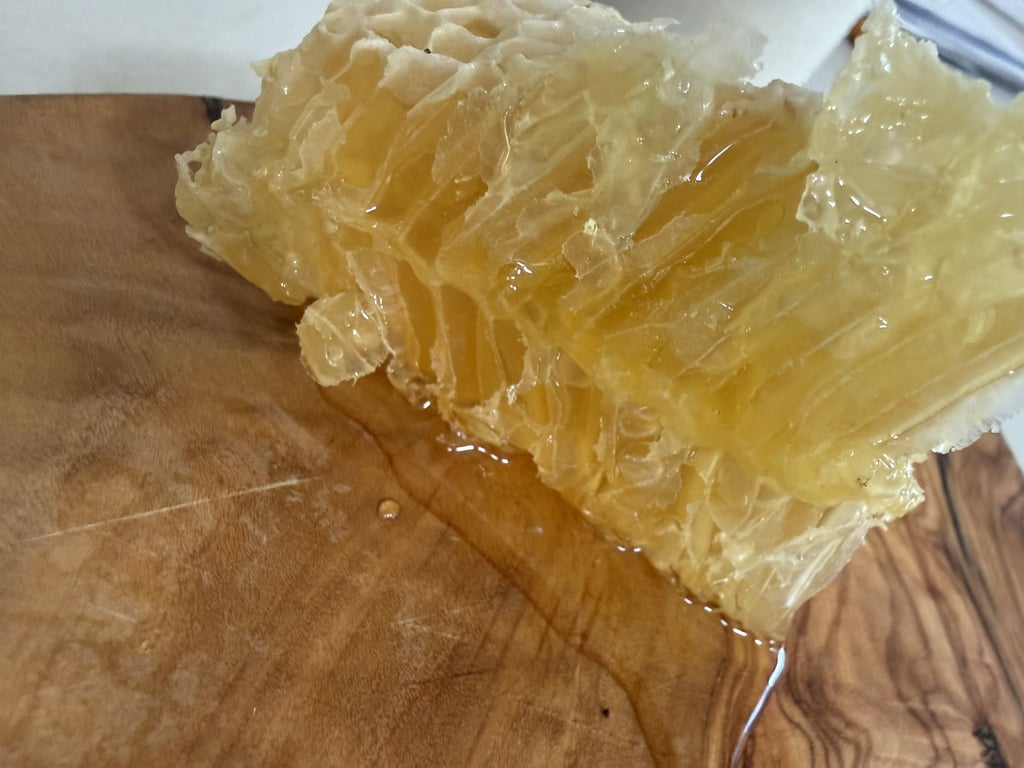
While everyone else is out celebrating Independence Day with sparklers and barbecues, my yard crew and I are celebrating our own version of freedom: absolute honey abundance. With a local Farmers Market run on the horizon, the mission today was all about inventory building. I headed out to The Vault (our rockstar pink hive) and brought back three gorgeous supers that were glistening with pristine white wax.
The Snow-White Perfection of The Vault 👑🤍
The first thing that hits you when you look at these frames is the capping wax. It is blindingly, pristinely white. When bees are on a massive, heavy nectar flow like they are right now in Wisconsin, they secrete brand-new wax glands to seal up the cells. Because it's fresh out of their systems and hasn't been walked on by thousands of dirty feet or used for raising babies, it creates a gorgeous, snow-white seal over the honey.
But as I lined them up on the processing table, I ran into a classic beekeeper dilemma. One frame was completely sealed down to the millimeter. The second frame had a tiny patch of open cells on one corner. The third frame had a decent-sized patch of uncapped cells, and some of those cells were completely bone-dry and empty.
Playing the 80% Rule & Moisture Math 🔬🎯
In beekeeping, the golden rule is that a frame should be at least 80% capped before you spin it. Why? Because open cells usually contain unripened nectar. If that wet nectar gets mixed into your harvest, the water content drives up, and your honey can actually ferment and spoil in the jar.
So, what was the official call on our three frames? We gave them the green light! The frame with the tiny open patch was easily sitting at 90% capped, making it a no-brainer. But the frame with the larger open section provided a great lesson in hive physics. Because those open cells were completely empty—meaning the bees hadn't even started dropping nectar in them yet—there was exactly zero extra moisture risk. When they spin, you are only slinging the perfectly cured, low-moisture honey from the capped sections.
The Honey Runner Hits its Stride ⚡🍯
The real reason for spinning all three was to unlock the true power of our newly-christened CIVAN extractor, The Honey Runner. Because it's a 3-frame tangential machine, having three matching frames is the ultimate jackpot for balance.
We uncapped the wax, slid the three heavy assets into the stainless steel baskets, and fired up the motorized drive. It was a beautiful, whisper-quiet spin—no rattling, no walking across the floor, just pure centrifugal force slinging a flawless, 100% liquid harvest against the walls.
Opening up that heavy-duty honey gate and watching the pristine, clear gold stream through the multi-stage sieves directly into our bottling buckets was the ultimate holiday firework show. We are officially packing the shelves and stacking the inventory for the market!
📜 Moral of the Day
Empty space isn't a failure; it’s just a clean slate. In the yard and on the frames, it’s easy to stress over the sections that aren't finished or filled yet. But when you look closer, empty cells don't ruin the harvest—they just mean the bees have room to grow, and you have a safe, balanced spin. Focus on what's beautifully capped, utilize your tools to their maximum potential, and enjoy the fruits of a booming summer.
The buckets are full, the Honey Runner is cleaned down, and the market inventory is officially growing. Happy 4th of July to our amazing community!